Introduction to Scalable CSS Naming
In modern web development, maintaining clean and scalable CSS is crucial for project longevity and team collaboration. Naming conventions play a pivotal role in achieving this goal by providing a structured approach to class naming. The Block Element Modifier (BEM) methodology has gained widespread adoption for offering clarity, predictability, and scalability in CSS.
What is BEM?
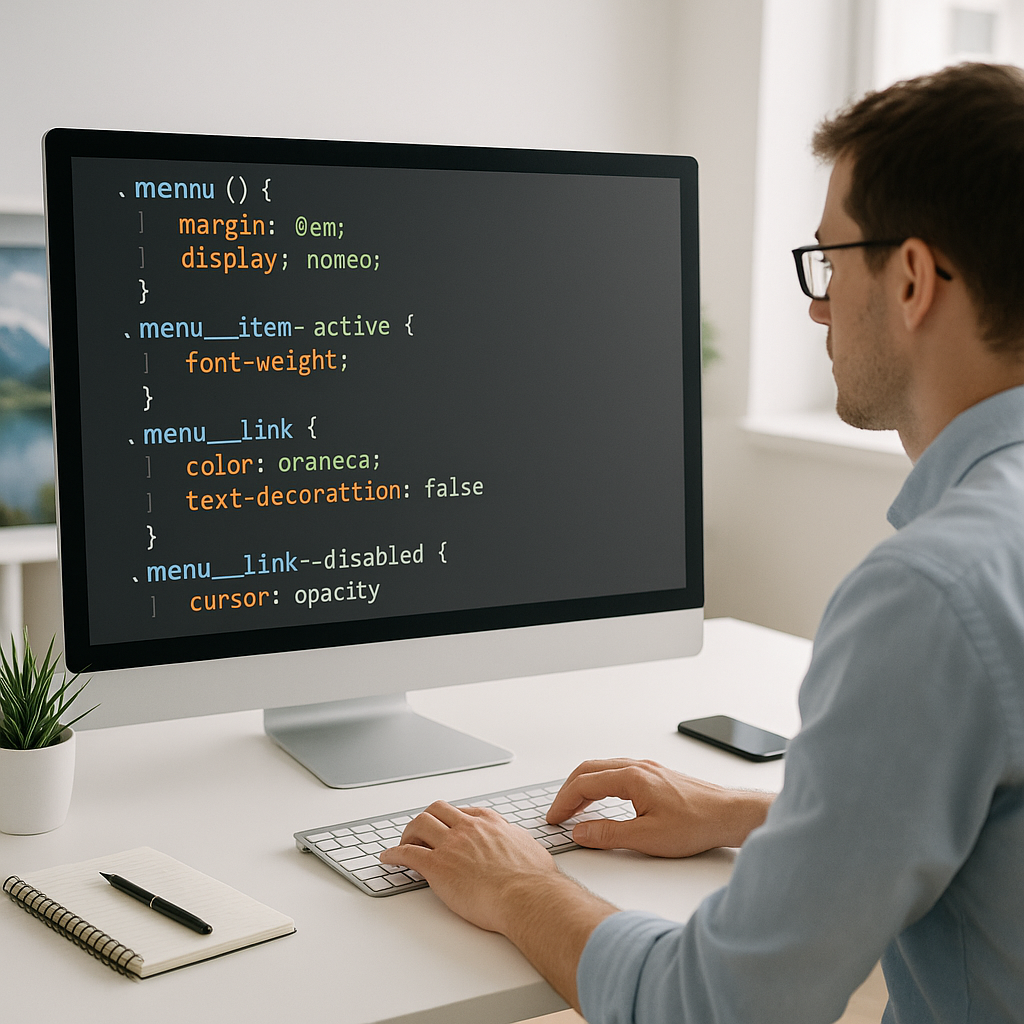
BEM is a naming methodology that breaks down CSS classes into three parts:
- Block: The standalone entity, such as a header, menu, or button.
- Element: A part of the block that has no standalone meaning and is semantically tied to the block, like a menu item or button icon.
- Modifier: A flag on a block or element that changes its appearance or behavior, for example, button–primary or menu__item–active.
Its syntax typically looks like block__element--modifier.
Benefits of Using BEM Naming
- Improved Readability: Class names clearly indicate their purpose and relationships.
- Encapsulation: Helps avoid CSS conflicts by scoping styles to blocks and elements.
- Scalability: Facilitates easy addition of new styles without breaking existing ones.
- Team Collaboration: Establishes a shared language reducing miscommunication.
- Reusability: Encourages modular code structures that can be reused across the project.
Implementing BEM in Your Workflow
To start using BEM effectively, follow these actionable steps:
- Identify Blocks: Break your UI into discrete, reusable components.
- Name Elements Properly: Think about which parts belong inside the blocks.
- Create Meaningful Modifiers: Use modifiers only to express variations or states.
- Write Consistently: Agree on naming syntax with your team and stick to it.
- Use Tools: Leverage linters or conventions in CSS preprocessors to enforce BEM rules.
Common Pitfalls and How to Avoid Them
While BEM is powerful, avoid these common mistakes:
- Overcomplicating Names: Keep names concise; avoid unnecessary nesting.
- Using Modifiers Incorrectly: Modifiers should only describe variation, not new elements.
- Mixing BEM With Other Conventions: This reduces clarity and can confuse developers.
- Ignoring Semantic HTML: BEM is for CSS class names, always prioritize semantic HTML structure.
Extending BEM with Modern CSS Practices
BEM pairs well with modern CSS features and methodologies:
- CSS Variables: Use variables for reusable values within blocks.
- CSS Modules: Combine with BEM to scope styles even more strictly.
- Component Libraries: Integrate BEM naming for consistency across frameworks.
- Preprocessors: Sass or LESS can help generate BEM classes programmatically.
Conclusion
Adopting BEM for CSS naming transforms your stylesheets into scalable, maintainable assets that can grow with your project. Its clear and predictable structure improves teamwork, reduces bugs, and enhances performance. Start structuring your CSS with BEM today to build cleaner, more efficient frontends that stand the test of time.